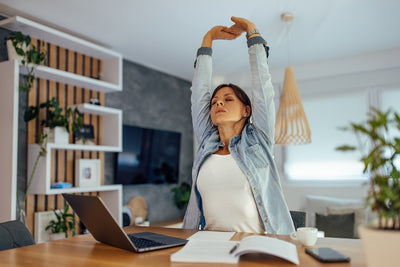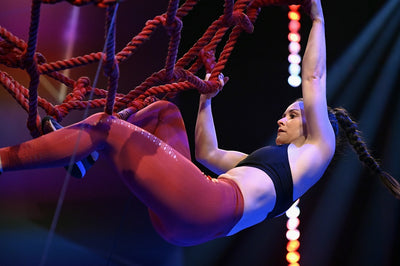


Sensorimotor and neuromuscular training for the nerve-muscle connection
Every movement you make – whether conscious or automatic – results from a finely tuned interplay between your brain , nervous system , and muscles . Only when these systems are in harmony can you react quickly, move with control, and maintain stability. This is precisely where sensorimotor and neuromuscular training comes in: it improves your perception , optimizes movement patterns , and increases your reaction time . These are key success factors for recreational and elite athletes alike. For all of us, sensorimotor and neuromuscular training can noticeably improve our quality of life . We'll tell you exactly what it's all about and how you can improve .
Sensorimotor training vs. neuromuscular training: the difference
The terms sensorimotor training and neuromuscular training are often used synonymously . However, this is not entirely accurate : Sensorimotor training essentially forms the foundation , while neuromuscular training represents a specialized, application-oriented development.
- Sensorimotor training – the connection between sensory perception (sensory perception) and movement (motor skills): It trains the body's ability to link sensory information – such as sight, touch, balance, and proprioception (the self-awareness of body position) – with motor reactions. The focus is strongly on proprioception and balance training, which is why sensorimotor training is originally known from the field of rehabilitation.
- Neuromuscular training (NMT) – the interplay between brain, nervous system, and muscles: The focus is on how muscles are activated in the correct sequence, with the right intensity, and at the right time. The approach is similar to learning motor skills (from a baby lifting its head to walking). Cognitive elements are also incorporated to improve reaction speed, coordination, and strength.
What sounds complicated at first isn't so difficult in practice . For example, when standing on one leg, you train the fundamentals of your sensorimotor skills (balance and body stability). If you also perform complex movements or react to unexpected stimuli , you challenge your neuromuscular system at a higher level and train your reaction time , coordination , and movement automation . These are practical, everyday skills that are important for active people and can even make a huge difference for top athletes.
Proprioception as a basis for sensorimotor and neuromuscular training
Your brain plans, directs, and controls every single movement – conversely, sensors in your muscles, tendons, and joints send information to your brain . These proprioceptors continuously report to your brain where your limbs are located, how tense your muscles are, and in which direction you are moving. This allows you, for example, to touch your nose with your eyes closed: you can feel your body without looking . This is called proprioception or kinesthetic awareness. It is crucial for your balance , coordination , and safe movement in everyday life.
What are the benefits of training the nervous system and muscles?
Proprioception requires our deep muscles – these are the small, deep-lying muscles near your spine and joints . Unlike the superficial muscles, which perform large movements, these muscles stabilize your joints and keep you upright. Sensorimotor and neuromuscular training activates precisely these hidden stabilizers particularly effectively. And this has several advantages :
- Improved balance and coordination: With trained proprioception, you can master unstable surfaces, uneven walkways and quick changes of direction more confidently – in sports and in everyday life.
- Faster reactions: The signal transmission between the brain and muscles is improved. Your body reacts faster and more precisely to unexpected situations such as falls or quick evasive movements.
- Stronger deep muscles: Small stabilizers (especially in the torso and buttocks ) are specifically activated, which can lead to better posture, less back pain and more stability.
- Fall prevention: Especially important for older people – combined balance and strength training reduces the fall rate.
- Fewer injuries: Neuromuscular training reduces the risk of lower extremity injuries. Knee, ankle, and muscle injuries, in particular, occur less frequently.
Training the deep muscles is therefore particularly important in sensorimotor skills, but also essential for neuromuscular exercises.
Neuromuscular training in everyday life and in sports
But what exactly is neuromuscular training when applied? Modern sports science is based on the following insight: In everyday life, we rarely move in isolation – we almost always have to think, decide , and react to stimuli simultaneously .
Examples from everyday life:
- You go for a walk and have a phone conversation at the same time.
- You're carrying shopping bags and have to go down a flight of stairs at the same time.
- The ground you're walking on changes and you have to maintain your balance.
Neuromuscular challenges are even more pronounced and intense in sports and elite sports.
Examples from sports:
- Tennis: Speed in changing direction, simultaneous analysis of the opponent
- Ice hockey: Maintaining balance even during collisions, still executing plays
- Basketball: Dribbling coordination, quick evasive maneuvers, maintaining tactics
To better master these situations and challenges, the brain must learn to distribute attention more efficiently and handle multiple demands simultaneously.

Neuromuscular and sensorimotor training is worthwhile for anyone who wants to harmonize muscles, nerves and senses.
Exercises from sensorimotor skills and neuromuscular training
There are specialized neuromuscular centers that have special equipment for sensorimotor and neuromuscular training and even offer treatment therapies (for example, in the case of a neuromuscular transmission disorder). However, you can do many simple and effective exercises anywhere without any equipment . Important: Always prioritize your safety and only perform the exercises in a way that makes you feel comfortable. It's always a good idea to discuss and plan possible exercises with experts beforehand.
To get you started: proprioceptive sensorimotor training
It's best to start with simple exercises that challenge your balance . Then you can increase the difficulty with sensorimotor training, which is more like strength training and strengthens the deep muscles from your shoulders and knees down to your feet.
Beginner exercises for better balance
- The single-leg stance is the basis for many advanced exercises. Stand on one leg and hold this position for 10–15 seconds initially. If that goes well, bring the other leg forward, bent at the knee, or close your eyes – this makes the exercise significantly more challenging.
- Heel-to-toe walking involves walking in a straight line and placing your heel directly in front of the toes of your other foot with each step. This trains your balance while walking.
- The standing balance pose is a classic exercise from gymnastics, yoga, and Pilates. Stand on one leg and slowly bend your upper body forward while extending the other leg backward. Your body should form a straight line.
Advanced exercises for a greater challenge
- Once the basic exercises are working well, you can try standing on one leg on an unstable surface. Use a sofa cushion, a rolled-up mat, or a special balance pad. The unstable surface will challenge your proprioception even more.
- The plank with movement trains your core stability. Start in the classic plank position (forearm plank) and alternately lift one leg or one arm for a few seconds. This forces your deep core muscles to stabilize your body.
- For the single-leg pelvic lift, lie on your back, place one leg flat on the floor, and extend the other leg upwards. Then lift your pelvis until your body forms a straight line. This exercise strengthens not only your glutes but also the deep stabilizers of your pelvis.
- The Dead Bug exercise is perfect for your core stability. Lie on your back, raise your arms and legs, and alternately extend one leg forward while the opposite arm extends backward. Important: Keep your lower back firmly on the floor. This trains coordination and strengthens your abdominal and back muscles simultaneously.
Neuromuscular training exercises: Linking them to cognitive tasks
Now it gets really interesting and a bit more complicated . The goal now: Combine the learned exercises with cognitive tasks . It's perfectly fine if you don't succeed right away – nobody's a neuromuscular master overnight.
- For example, try counting backwards from 100 in increments of three while standing on one leg (100, 97, 94...). Or solve simple math problems while holding the balance position.
- You can also use visual distractions. Have someone throw you balls to catch during your balance exercise . Or slowly move your head back and forth while standing on one leg – this provides additional challenges for your vestibular system (balance organ).
- Reaction drills make your training even more dynamic. Ask someone to give you commands ("left," "right," "turn") to which you must react. Or use a stopwatch and try to assume a specific position as quickly as possible after a signal.
The right support for your training
No question: Neuromuscular and sensorimotor training can be really strenuous at times. That's why Dextro Energy* supports you on the go with your workouts, providing convenient macronutrients like carbohydrates combined with micronutrients . Discover, for example, our delicious sports bars and various dextrose products . Just as important: your hydration before, during, and after training. Our sports drinks provide your body with delicious fluids. Another tip: Our Focus Shot° with 99% fruit content , our sports tablets , and our diverse range of energy gums* are handy and optimally portioned, making them ideal for taking with you and rationing during your workouts.
Whether young or old: Now is your time to train your muscles and brain.
Your nervous system is incredibly adaptable – take advantage of this neuroplasticity and start your sensorimotor and neuromuscular training today. Your body will thank you with better balance , more stability , and a greater sense of security in everyday life.
___________
* contains carbohydrates
Vitamin B12 contributes to normal psychological function.
A varied, balanced diet and a healthy lifestyle are important.
____________
SOURCES:
https://pmc.ncbi.nlm.nih.gov/articles/PMC6139302/
https://d-nb.info/979532213/34
https://www.sciencedirect.com/science/article/abs/pii/S0968016025001632
https://pubmed.ncbi.nlm.nih.gov/19952811/
https://pmc.ncbi.nlm.nih.gov/articles/PMC11225257/
IMAGE CREDITS:
Hero image: iStock.com/urbazon
Inline image: iStock.com/Zinkevych